
By Amy Cockerham
Public Ed Works
WARSAW (June 3, 2026) – From tomatoes to strawberries to edible flowers, students have tried to grow just about everything in an old shipping container at James Sprunt Community College.
College staff encourage local farmers and students to explore hydroponic farming at the shipping container at their on-campus farm.
“Our Hydroponics Smart Farm houses one of probably the coolest technology advances that we have in agriculture so far,” Smart Farm Manager and Agriculture Instructor Katlyn Foy said.
“We house our transplants in our nursery station, where we start all of our plants from seed, and then we will transplant them once they’re ready at about three weeks. So they’ll spend about three to six weeks in our cultivation area until they’re ready for harvest.”
Foy said the method controlled by a computer system is environmentally friendly.

“The cool thing about our hydroponic trailer is that it cuts down on about 98% use of water, so we are able to be more sustainable,” Foy said.
“We’re also able to grow 2.2 acres at any given time year-round, so we don’t have to deal with growing seasons. So, we can grow what we want, when we want.”
All plants are grown organically.
“We’re completely Controlled Environment Agriculture, which means we grow year-round without the need for pesticides,” Foy said.
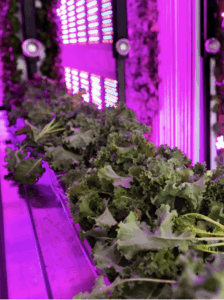
Credit: James Sprunt Community College
“The main thing that we focus on is leafy greens,” Foy said. “Lettuce salad mixes, kale, collards, cabbage, anything that kind of falls under that leafy green realm. We also do a lot with herbs. So things for seasoning, so basil, onions, we do a lot with cilantro.”
The program makes sure food doesn’t go to waste by sometimes doing food drives on campus.
“We give back to the community when we can, whether that be through CSA boxes, so Community Supported Agriculture, food pantries,” Foy said “Senior Services Center in Kenansville, so [students] donate produce boxes every month to them.”
As an instructor at an aptly named community college that indeed serves its community, Foy encourages North Carolina farmers who’ve never tried the method to give it a shot.
“We have farmers that are looking to supplement their income, maybe during the off-season,” Foy said. “Hydroponics is a good way to supplement that, if you have the space, and a lot of farmers already have the resources to do so.
“So I always like to say that I’m always open to visitors. I’m always open to questions and wherever I can be an asset in the community.”
For more information on getting involved, visit https://jamessprunt.edu/workforce-development/hydroponics-smart-farm//.
Leave a Reply